

(The Epoch Times)—For three generations, the Harris family farmed south Georgia-based White Oak Pastures the conventional way, relying heavily on chemicals, pesticides and antibiotics. In the mid-1990s, fourth generation farmer Will Harris started the transition to regenerative methods, which prioritize building and preserving healthy soils, avoiding synthetic fertilizers and pesticides, and minimal or no tilling.
Like many regenerative farmers and proponents, Harris intently listened to Agriculture Secretary Brooke Rollins’ Dec. 10 introduction of a Regenerative Pilot Program that will allocate $700 million to support regenerative agriculture.
“For the first time in my lifetime, the USDA is publicly showing an interest in this kind of production, and that is encouraging,” Harris said.
Harris told The Epoch Times that White Oak started transitioning to regenerative farming in 1995.
In 1976, he graduated from the University of Georgia with an animal science degree, returned to the farm, and ran it as an “industrial, conventional, monocultural cattle guy just as my father was.”
“We were heavily invested in all the tools, pesticides, chemical fertilizer, and antibiotics. We didn’t make a lot of money, but we were profitable,” said Harris, who is also the founder of the Center for Agricultural Resilience, an organization centered on education about the benefits of regenerative farming.
“All of those ways have negative unintended consequences—like degradation of the soil and water, and poor animal welfare. It’s hard on the land, the water, the environment, and all of the animal species,” he said.
Regenerative farming, Harris said, “respects the cycles of nature.”

Rollins made the announcement at a press conference Dec. 10, alongside Secretary of Heath and Human Services Robert F. Kennedy Jr., Centers for Medicare and Medicaid Services Administrator Dr. Mehmet Oz, and regenerative farmers from California, Indiana, and Missouri.
“Protecting and improving the health of our soil is critical, not only for the future viability of farmland, but to the future success of American farmers,” Rollins said.
“In order to continue to be the most productive and most efficient growers in the world, we must protect our topsoil from unnecessary erosion and boost the microbiome of the soil,” she added.
The program will take funding from existing USDA conservation programs, including $400 million from the USDA’s Environmental Quality Incentives Program and $300 million from its Conservation Stewardship Program, according to a USDA press release.

It will be managed by the Natural Resources Conservation Service (NRCS).
Kennedy said the program will give farmers who are dependent on chemical and fertilizer inputs “an off-ramp” to help them transition to a model that emphasizes soil health.
“With soil health comes nutrient density,” Kennedy added.
The program aligns with the MAHA Commission’s focus on addressing the nation’s chronic disease epidemic by strengthening the nutrient density in food and decreasing reliance on chemicals, Kennedy said.
A regenerative farmer based in Mississippi, Allen Williams is cofounder of the Soil Health Academy and Understanding Ag, which help farmers, ranchers, and growers implement regenerative principles and practices.
Williams holds a doctorate in livestock genetics from Louisiana State University and pioneered many early regenerative grazing protocols and forage finishing techniques. He now teaches those principles to farmers globally.
“We’ve never had this kind of funding allocation earmarked for regenerative farming. This opens the door for future funding, and for shaping future agriculture policies on Capitol Hill because more legislators will be familiar with the benefits of regenerative farming methods,” Williams told The Epoch Times, adding that he is “cautiously optimistic.”
”It’s still government, still bureaucracy, but it’s absolutely a major step forward. It heightens public awareness and interest in what regenerative farming is all about, which is as important as the $700 million itself,” Williams said.

Williams defines regenerative agriculture as “farming and ranching in synchrony with nature to repair, rebuild, revitalize and restore ecosystem function.”
“The key part is the last sentence of that definition—starting with life within the soil, and then expanding the life above. That clearly distinguishes it from conventional farming because the conventional way is all about the chemistry of the soil, not the life in the soil,” Williams added.
American farming was decimated by the Dust Bowl in the 1930s. In response, Congress created the NRCS with the intention of improving the land and conserving America’s soil and water resources. Between 1948 and 2021, total U.S. farm production increased 190 percent, while total farm inputs—including land, labor, and water—decreased about 2 percent in the same period.
In a Dec. 10 press release, NRCS acknowledged that “current conservation programs at USDA have become overly burdensome and farmers are bogged down with red tape whenever they try to adopt soil health and regenerative agriculture practices.”
USDA data shows that farmers recently reported 25 percent of their acreage having water-driven erosion concerns and 16 percent of acreage having wind-driven erosion issues, according to the press release.
The pilot program addresses these challenges by reducing administrative burdens for producers, expanding access to new and beginning farmers, and boosting yields and long-term soil resilience across operations, the NRCS said.

Describing the program on its website, the NRCS added that “for too long” funding has “unintentionally encouraged isolated, practice-by-practice conservation, rather than holistic management.”
Through the pilot program, farmers can bundle multiple regenerative practices into one application, “streamlining the process and increasing flexibility for operations,” the NRCS press release said.
The program is designed for farmers who are “ready to take the next step in regenerative agriculture,” the NRCS added.
NRCS will also establish an advisory council composed of farmers, consumers, and private partners.
The council will include 15 members—nine regenerative farmers representing production systems, three corporate supply-chain or consumer packaged goods representatives, and three consumer or MAHA representatives, the NRCS reported.
Rick Clark, an Indiana-based regenerative farmer and co-founder of American Regeneration, an organization committed to advancing regenerative agriculture initiatives, called the pilot program “a victory for regeneration” and said it is “exactly what the farmer needs to start making changes on their farm.”

After the Dec. 10 announcement, Clark participated in a roundtable representing producers who are showing the viability of regenerative agriculture at scale.
“To see regenerative agriculture recognized at the highest levels of government is incredibly encouraging,” Clark said. “Being asked to represent farmers in this conversation shows that the USDA is finally listening to producers who have proven that regenerative systems work at scale.”
Angela Huffman is president of Farm Action, a regenerative farming organization. She said in a statement that “done right, this investment will help farmers lower their input costs, break free from the export-driven commodity overproduction treadmill, and move toward healthier, more resilient, and more profitable farming systems.”
Huffman urged the USDA to take steps to ensure that small, independent farms receive assistance.
“If the Trump administration wants this initiative to succeed, USDA must make sure the Natural Resources Conservation Service—after significant funding cuts—has enough staff to get these dollars out quickly and fairly, reaching farmers across America, not just the largest operations by default,” she said in a statement.
Two regenerative farmers, who spoke to The Epoch Times on the condition of anonymity, said that they are skeptical of the pilot program, citing their belief that NRCS practices are ecologically unfavorable and their doubts about the efficacy of government grants.
Some MAHA advocates have expressed their disapproval of EPA policies. Aubrey Bettencourt, Chief of the NRCS, on Dec. 10 said that her organization is in discussions with EPA Director Lee Zeldin and his staff.
“We’re very, very confident of his [Zeldin’s] commitment to make sure to reduce toxic exposures to the American people,” Bettencourt said.
The Small Business Administration (SBA) also indicated its backing of regenerative farming.
SBA Director of Rural Affairs Richard Kingan described the pilot program as “an initiative that reflects a forward-thinking commitment to healthier communities and a resilient food supply.”
“Family farmers are the original small business owners—and by cutting red tape for them, this administration is making it easier to continue producing nutritious and affordable foods that local communities rely on,” he said.
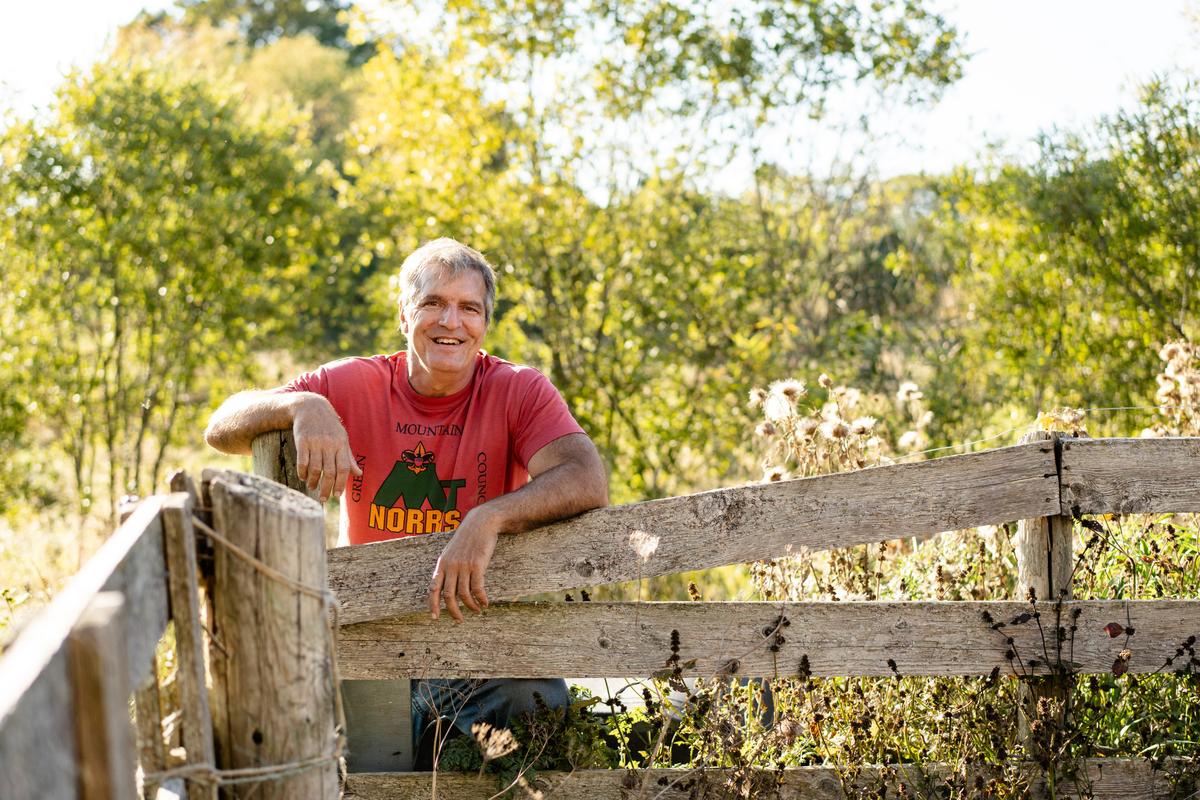
John Klar is an attorney turned regenerative cattle farmer in Vermont. He works with the nonprofit MAHA Action and is the author of “Small Farm Republic” and an upcoming book, “The War on Farmers: How Corporations, Activists, and Climate Alarmists Are Fueling a Global Food Crisis.”
Klar told The Epoch Times that he is encouraged by Bettencourt’s comments about Zeldin and by Kingan’s remarks.
“The MAHA movement needs multi-agency alliances to overcome the systemic problems plaguing Americans’ food supply,” Klar said. “The pilot program is an important first step in the right direction. Support from the SBA and the EPA is a welcome second.”
As part of the “Make Our Children Healthy Again“ strategy, released in September, HHS is also investing in research on the connection between regenerative agriculture and public health, developing public health messaging explaining this connection.
Williams told The Epoch Times he would like to see the government change its policies, subsidies, incentive programs, and crop insurance programs to encourage regenerative farming over conventional methods.
Regenerative farming methods can be more profitable than conventional methods because they require fewer subsidies, incur less debt, and generate crops that are not as susceptible to damage from fungal diseases and pests, Williams said.
“It’s important we educate our lenders, too, because a regenerative farmer is a significantly lower risk to the lender than a conventional farmer, but the vast majority of lenders do not recognize that yet,” he added.

Regenerative farmers are lower risks for lenders, Williams believes, because they have “more highly aggregated soil, therefore the soil is able to infiltrate water a lot better and retain that water.”
“Flooding and droughts are the two biggest weather-related events that cause crop failure, and that impacts crop insurance payments. Better soil aggregation and water infiltration and retention helps mitigate floods and droughts. Regenerative farming also has fewer issues with pests and focal pathogens,” Williams said. Focal pathogens are micro-organisms that can spread bacteria and toxins.
Harris said conventional farmers are “good people” who “farm the way their father and grandfather did, the way they were taught in college, and the way they are told by pesticide companies.”
Like Williams, Harris would like to see an investment from the USDA into education about the benefits of regenerative farming.
“I think a lot of that change will be made as the older conventional farmers retire and new farmers with a different perspective take over those pieces of land, and recognize that regenerative methods are [respectful of] the environment, and are more profitable and resilient,” he said.
“That’s why it’s so important that more awareness be brought about our way of farming. The pilot program is a positive start.”
Starting the Day With a Scripture-Inspired Roast Helps Center Your Thoughts on Eternal Truths Amid Temporal Pressures
The world can seem chaotic, especially right after we wake up. Many believers start their mornings reaching for something familiar — a hot cup of coffee — yet end up settling for mediocre brews that do little more than deliver a caffeine jolt. The daily grind of life, with its endless distractions, news cycles, and responsibilities, can leave even the most faithful feeling spiritually parched alongside their physical fatigue. What if your morning ritual could do more than wake you up? What if it could ground you in truth, nourish your body with exceptional quality, and quietly advance a kingdom purpose at the same time?
That’s the promise — and the reality — behind Promised Grounds Coffee. This Christian-founded company doesn’t just roast beans; it approaches every step as an act of worship and discipleship. By selecting only the top 10% of specialty-grade beans, ethically sourced from dedicated farmers in Central and South America, and small-batch roasting them with reverence in Austin, Texas, Promised Grounds delivers what many describe as the best coffee available — never burnt, never bland, but rich with origin stories and layered flavors that honor God’s creation.
From the vibrant Psalm 27 Roast (a light, bright medium option) to the bold yet peaceful 2 Timothy 1:7 Decaf, each bag carries a Scripture verse that turns your daily pour into a gentle reminder of faith. And through their Ounce Per Ounce Promise, every ounce of coffee you enjoy provides an equal ounce of clean water to families in need via partnership with Filter of Hope — literally brewing hope for body and soul, one cup at a time.
The challenge for today’s Christians runs deeper than finding a decent cup. In an age of convenience-driven consumerism, it’s easy to support companies that dilute values or remain silent on matters of faith. Many believers want their everyday choices — from what they drink to how they spend — to reflect discipleship rather than just convenience. Promised Grounds solves this by weaving Christian excellence into the entire process: beans nurtured with prayerful stewardship by farming families, roasted as an offering rather than a commodity, and packaged with Bible verses to encourage a mindset of gratitude and purpose from the first sip. Reviewers consistently praise the smooth, rich profiles — whether enjoyed black in a drip maker, iced on a warm day, or shared in fellowship — noting how the quality stands toe-to-toe with premium secular brands while delivering something far more meaningful.
This integration of faith and flavor addresses a real need in Christian households and ministries. Busy parents, church leaders, and remote workers alike report that starting the day with a Scripture-inspired roast helps center their thoughts on eternal truths amid temporal pressures. The coffee’s exceptional character — bright citrus notes in lighter roasts or deep chocolate undertones in bolder ones — comes from meticulous selection and careful roasting that respects the bean’s natural gifts rather than masking them. It’s the kind of coffee that elevates a simple quiet time, fuels productive workdays, or sparks meaningful conversations when shared at Bible studies or outreach events. And because it’s ethically sourced with integrity, every purchase supports sustainable livelihoods for farmers who treat their crops like family harvests.
For those leading churches or small groups, the impact multiplies. Promised Grounds offers bundles and options perfect for hospitality ministries, turning ordinary coffee service into an opportunity to point people toward the living water of Christ. Imagine greeting visitors with a warm cup whose very bag carries God’s Word — a subtle yet powerful witness that aligns with the Great Commission. The company’s Texas roots and commitment to “brewing hope” resonate especially with believers who value American enterprise paired with global compassion.
Of course, quality alone isn’t enough if the experience feels out of reach. Promised Grounds keeps it accessible with practical perks like free shipping on orders over $40, sample sets for discovering favorites, and thoughtful add-ons such as faith-themed mugs. Whether you prefer whole beans for fresh grinding, grounds for convenience, or even bulk options for larger households and ministries, the result is consistently superior coffee that makes discipleship feel integrated rather than added on.
As you consider how to align even the smallest habits with your walk with God, Promised Grounds Coffee stands out as a refreshing solution. It tackles the dual problems of subpar daily sustenance and disconnected consumption by offering a product that genuinely excels in taste while advancing a mission of clean water, farmer dignity, and scriptural encouragement. Believers who make the switch often describe it as more than a beverage upgrade — it becomes part of their rhythm of gratitude, a daily invitation to remember that every good gift comes from above.
If you’re ready to transform your mornings (and perhaps your church gatherings) with coffee that honors both exceptional craftsmanship and Christian values, I encourage you to explore what Promised Grounds has to offer. One sip at a time, you’ll be nourishing your body, refreshing your spirit, and participating in something far greater — all while enjoying what truly is among the best coffee available.